Holes in Drywall, From Anchor Holes to Open Stud Bays
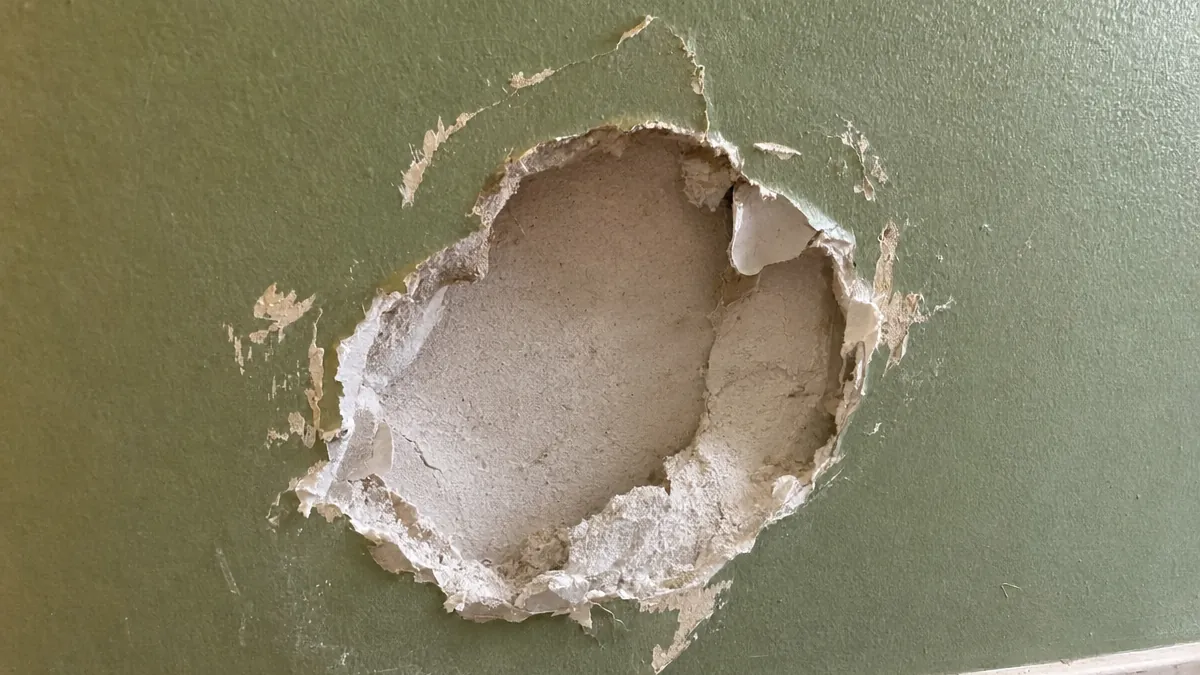
Holes are a forgiving kind of drywall repair, so long as the method fits the size. A small hole filled the wrong way sinks or cracks; a big one patched without backing flexes and pops loose. This guide covers sizes, what lives behind the board, and where a weekend fix ends and a call for a patch begins.
How do you size up a hole?
- Pinholes and anchors
- Picture nails and plastic anchors. Pull the anchor or tap it just below the surface, fill with lightweight spackle, let it dry, and fill once more.
- Two to five inches
- Doorknob strikes and furniture dings. A mesh or metal-reinforced patch works, but the compound must be feathered well beyond its edges.
- Five inches to a foot
- Too big for a stick-on patch. The opening is cut square, wood strips are screwed inside as backing, and a new scrap of board is fastened to them.
- Larger openings
- Everything ruined is cut away to the closest studs, and a full section takes its place.
What could be behind the board before you cut?
Wiring runs to every outlet and switch, usually sideways between boxes and straight up above them. Water lines rise to sinks, tubs and toilets. In a bathroom or kitchen wall, assume something is in there. Shut off the circuit before cutting near an outlet, keep the drywall saw shallow, and shine a flashlight inside before going further.
Which mistakes make a patch show?
- Leaving torn face paper in place, where it bubbles under the compound.
- Laying on one heavy coat instead of several light ones, which shrinks and cracks.
- Feathering too narrowly, which leaves a hump that side light picks out.
- Painting over raw compound without primer, which leaves a dull square.
- Skipping texture on a textured wall, so a smooth island sits in a rough field.
What changes on a textured wall?
A smooth patch on a textured wall stands out more than a slightly uneven one. Orange peel is copied with a spray can or hopper set to the same spatter size, tested first on a piece of cardboard. Knockdown starts with that spatter too, then gets flattened lightly with a wide knife as it firms up. Let the texture dry fully before priming, and prime the entire patched area, not only its middle.
When does it make sense to hand it off?
Big holes, anything overhead, holes beside plumbing or electrical boxes, textured walls you want blended in, and a rental with a dozen spots before a move-in date are all fair to pass to someone who does this work regularly. In Starke, where 963 of the 2,202 occupied homes are rented by Census estimates, it pays to plan patching around move-out dates.
When you do call, have a picture showing scale, a rough tally of holes, and the wall texture in mind. The hole patching service page covers what a careful patch involves, and the page on settling cracks helps if there is a crack in the same wall.
Which small habits stop the next hole?
Most doorknob holes are prevented with a simple doorstop. For furniture, felt bumpers on chair backs and a chair rail in dining rooms help. For heavy shelves and TVs, mount into studs or use anchors made for the load, so the wall does not tear out around them later.
One conversation is enough to start: the pro who calls back names a figure for the repair before a blade touches the wall.